





Good matcha rarely happens by accident. Pour hot water over the powder, stir it a few times with a spoon, and you get exactly what most people expect from a first attempt: a murky, bitter cup with clumps of undissolved green dust floating on top. That outcome has nothing to do with the quality of your powder and everything to do with the froth, or rather the lack of it. Frothing is the step that turns raw matcha into a smooth, slightly sweet, full-bodied drink, and it is also the step most cafes and tea shops under-train. If you run a coffee bar, a bakery, or any foodservice operation that has decided to add matcha to the menu, understanding how to froth it properly is not a nice-to-have. It is the difference between selling a premium beverage and pouring money down the drain.
The reason frothing matters comes down to what matcha actually is. Unlike loose-leaf tea, which you steep and then remove, matcha is stone-ground green tea leaves suspended directly in the liquid. You are drinking the leaf, not an infusion of it. That means every particle of powder needs to be broken apart and distributed evenly, or you end up with a cup that tastes harsh in one sip and watery in the next. Frothing solves both problems at once. The rapid motion separates the tiny clumps that form when dry powder hits water, and the layer of fine foam on top traps aroma and softens the first impression on the tongue. A well-frothed bowl of matcha tastes rounder, sweeter, and less astringent than the same powder whisked half-heartedly, even though the ingredients are identical.
Why matcha clumps in the first place
Matcha powder is ground so finely that the individual particles are only a few microns across, which gives it that brilliant green color but also makes it clingy. When the powder hits water, the outside of each tiny clump wets and forms a kind of gel barrier that keeps the inside dry. Stirring gently never breaks those barriers. You can chase a clump around the bottom of a bowl for minutes with a spoon and still pour out a drink flecked with dry powder. That is why technique matters more than brute force, and why matcha traditions developed around a specific tool rather than just any utensil.
There is also a second factor at work: the powder itself. Matcha contains fats, fibers, and plant compounds that do not dissolve in water the way sugar or salt would. They suspend, which means they need mechanical agitation to stay in the liquid instead of settling out. A good froth is partly the result of that agitation and partly the result of air being whipped into the surface. The two happen together, and both are necessary for a cup that holds its texture from the first sip to the last.
Understanding this changes how you approach the drink. If matcha clumps because of a gel barrier and settles because it does not dissolve, then the solution is not hotter water or more powder. The solution is motion, applied the right way, with the right tool, for the right amount of time. Everything else, the temperature, the ratio, the quality of the powder, is secondary to that single insight.
The tools that actually work
You can froth matcha with several different pieces of equipment, and each one produces a slightly different result. Knowing what each tool does well, and what it does poorly, is the first step toward choosing gear that matches your volume and your menu.
A traditional bamboo whisk, called a chasen, remains the benchmark for a reason. Its dozens of thin, flexible tines cut through the powder and whip air into the liquid at the same time, and no electric device has fully replicated the fine, silky foam it produces. The motion is a fast zigzag rather than a circular stir, and the result is a dense micro-foam that holds for several minutes. The tradeoff is labor. A chasen works beautifully for one bowl at a time, but a busy cafe that needs eight matcha drinks during a morning rush will struggle to keep up, and the whisk itself requires rinsing and drying between uses to avoid staining and mold.
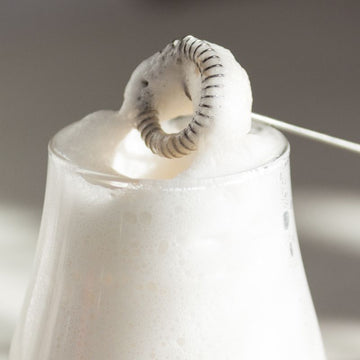
An electric milk frother, the kind with a small spinning whisk on a wand, is the common compromise. It is fast, consistent, and requires almost no training, which makes it attractive for staff who have never made matcha before. The foam it produces tends to be lighter and airier than a chasen's, more like cappuccino foam than the dense crema of a properly whisked bowl, but for a matcha latte or a blended drink that is usually fine. The key is to use a frother that operates at a high enough speed to break up the powder rather than just swirl it around. Cheap battery-powered frothers spin too slowly and leave clumps at the bottom, which defeats the entire purpose.
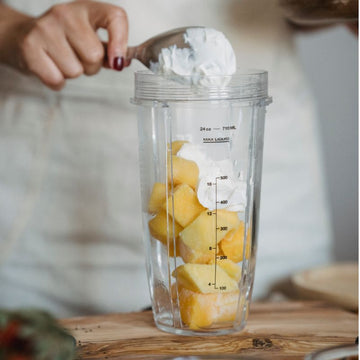
A blender offers a third route, especially for cold drinks or for making matcha in larger batches. A few seconds in a high-powered blender will completely disperse the powder, and if you are making an iced matcha or a matcha smoothie, the blender is often the most practical tool in the building. The foam it creates is coarse and short-lived, but for a drink that is served over ice that hardly matters. What matters is that the powder is fully incorporated, which the blender guarantees.
There are also dedicated matcha machines on the market now, essentially electric whisks or shakers designed specifically for the drink, and they occupy a middle ground between the chasen and the frother. They are worth a look if matcha is a meaningful part of your menu, because they offer consistency without the wrist fatigue, but they are also one more appliance to clean and one more thing that can break. For most small businesses, the honest answer is that a good electric frother covers ninety percent of what you need, and a chasen is a worthwhile backup for the customers who want the traditional experience.
Temperature, ratio, and the mistakes that follow

Before you start frothing, you have to get the liquid right, and this is where a surprising number of cafes go wrong without ever realizing it. Boiling water is the enemy of good matcha. Water poured straight off a rolling boil is hot enough to scorch the powder, which releases tannins and turns the drink unpleasantly bitter. The sweet spot is between 160 and 175 degrees Fahrenheit, well below boiling, and hitting that range matters more than most people expect. A cup made with water at 175 degrees tastes noticeably sweeter and less grassy than the same powder at 200 degrees, even though only twenty-five degrees separate them.
The ratio is equally easy to get wrong. Too little powder and the drink tastes thin and watery, more like tinted water than matcha. Too much and it turns harsh and astringent, with a bitterness that no amount of milk will hide. A standard starting point is roughly one to two teaspoons of matcha powder per eight ounces of liquid, depending on whether you are making a traditional bowl or a latte. For a traditional usucha, the thinner style, a scant teaspoon in about two and a half ounces of water is typical. For a latte, most shops land around one and a half to two teaspoons in eight ounces of milk. The exact number depends on your powder, so taste as you go and write down what works.
One of the most common mistakes is adding too much water before frothing. If you fill the bowl or cup all the way to the top, there is no room for the whisk to move, and the foam never forms properly. A small amount of liquid, whisked into a smooth paste first, then topped up with the rest, gives the powder a chance to disperse before it is diluted. This two-step approach is the single most reliable way to avoid clumps, and it costs nothing but a few seconds of attention.
Another frequent error is using milk that is too hot or too cold. Matcha lattes are built on steamed milk, and the temperature of that milk changes how the foam behaves. Milk steamed to around 150 to 160 degrees, the same range as a good latte, is warm enough to support the matcha without scalding it. Milk that is too cold makes the matcha harder to dissolve, while milk that is too hot brings back that bitter edge you just avoided by not using boiling water.
The basic whisking method, step by step
If you want to learn the technique properly, start with the traditional method, because everything else is a shortcut built on the same principle. Sift the matcha powder through a fine strainer into a warm bowl. Sifting feels fussy, and it is, but it breaks up the clumps before they ever touch water, which means the whisk has far less work to do. Warm the bowl beforehand by swirling a little hot water in it and dumping it out, because a cold bowl drops the water temperature below the ideal range almost immediately.
Add a small amount of water, just enough to make a thick paste, and whisk it with a chasen in a quick back-and-forth motion. The movement should come from the wrist, not the whole arm, and it should be fast enough that the tines of the whisk never stop moving. You are not stirring; you are cutting through the paste, breaking it apart, and incorporating air at the same time. Ten or fifteen seconds of this is usually enough to turn the paste completely smooth with no visible flecks of dry powder.
Then add the rest of the water, pouring it in gently along the side of the bowl rather than dumping it straight onto the paste. Whisk again, this time with a slightly broader motion that reaches the bottom of the bowl and draws the surface into a foam. A good bowl of matcha should finish with a layer of fine, even foam across the whole surface, with no large bubbles and no dry powder clinging to the sides. That foam is your report card. If it is thin and patchy, the powder was not fully incorporated, and the cup will taste sharper than it should.
Pour the finished matcha immediately. The foam starts to break down within a few minutes, and the powder begins to settle, so a matcha drink that sits on the counter for ten minutes will not taste the same as one poured fresh. This is a small detail, but it is exactly the kind of detail that separates a shop that cares about matcha from one that treats it as an afterthought on the menu.
Making the electric method work under pressure
In a busy commercial setting, the traditional method is often a luxury you cannot afford for every single order. That is fine, because the electric method can produce excellent results if you treat it as a technique rather than a shortcut to be done carelessly.
The process starts the same way: sift the powder and add a small amount of liquid to form a paste. This step is non-negotiable even with a frother, because dumping dry matcha into a full cup of milk and hitting it with a wand is a recipe for clumps and a streaky, uneven drink. Once the paste is smooth, add the rest of the milk or water, then lower the frother into the liquid and turn it on. Keep the whisk end fully submerged but near the surface, because that is where the air gets incorporated, and move it slowly around the cup rather than holding it still. Twenty to thirty seconds is usually enough.
The result will be foamier and lighter than a traditional bowl, and for most lattes that is exactly what you want. The matcha and milk will be fully combined, the texture will be consistent, and the drink will hold up well enough for service. If the foam is too coarse, you are probably moving the frother around too aggressively or using a low-speed model. Slow, steady movement produces finer bubbles than fast, jerky motion, the same way it does when steaming milk for a latte.
The electric method also scales better than any other. A single staff member can handle a line of matcha orders with a frother far faster than with a chasen, and the learning curve is shallow enough that a new hire can be trained in one shift. That is not a knock on tradition; it is a recognition that most small businesses need speed and consistency more than they need ceremony. The customers who want the traditional experience will tell you, and a chasen on hand covers that request.
Scaling matcha service without losing the quality
Once you know how to froth matcha properly, the next question is how to serve it at volume without the quality collapsing under pressure. The answer is preparation. Most of the work in a good matcha drink happens before the frothing even starts, and a shop that sets itself up well can produce excellent drinks quickly without anyone rushing.
Pre-portioning the matcha is the simplest upgrade. Weigh out the powder into small containers at the start of each shift, or use a dedicated matcha scoop if your recipe is consistent enough to measure by volume. This removes the guesswork from every drink and ensures that the customer who ordered a matcha latte at 8 a.m. gets the same drink as the one who orders at 2 p.m. It also speeds up service, because the person on the drink station grabs a portion and starts frothing instead of fiddling with a spoon and a scale.
Standardizing the temperature is just as important. A water boiler set to the right range, or a steam wand used with a thermometer, removes the biggest variable in matcha quality. If different staff members use different water temperatures, the same drink will taste different from shift to shift, and customers notice that kind of inconsistency more than they notice almost anything else. Write the target temperature and ratio down, put it next to the station, and make it part of training.
Cleaning between drinks is the third habit that preserves quality over a shift. Matcha powder is sticky, and it dries into a stubborn film that is hard to remove if it sits. A quick rinse of the whisk, frother, or blender after each drink prevents buildup and keeps the equipment from contaminating the next order with stale, bitter residue. It also keeps the green from staining everything it touches, which matters more than you might think when the equipment sits in view of the customer.
For a business buying equipment for a matcha program, this is where the wholesale relationship becomes useful. A frother that runs for hours a day needs to be durable, easy to clean, and supported by a supplier who stocks replacement parts. A chasen needs to be replaced periodically as its tines wear, and cheap whisks with stiff, brittle tines break faster and produce worse foam. These are small purchases compared to an espresso machine, but they are the kind of purchase that quietly determines whether your matcha program works or limps along.
The payoff of doing it right
Matcha is one of those menu items that looks simple and is easy to do badly. Anyone can scoop green powder into a cup and call it matcha, and a lot of shops do exactly that. But a customer who has had properly frothed matcha, even once, can tell the difference immediately. The drink is smoother, sweeter, and more aromatic, with none of the bitterness and none of the grit. It feels like a premium product, which is precisely what it is.
That perception matters because matcha carries a higher price point than most other non-coffee beverages, and customers are willing to pay it only if the drink delivers. A sloppy, clumpy matcha latte is not just a bad drink; it is a broken promise about quality, and it teaches customers to order something else next time. A beautiful, velvety matcha does the opposite. It gives customers a reason to come back, a reason to post a photo, and a reason to bring a friend.
For a small foodservice business, the lesson is the same one that applies to every other skill worth learning. The technique is not difficult, but it is specific, and it rewards attention. Sift the powder. Watch the temperature. Form a paste before you add the rest of the liquid. Move the whisk fast and keep it moving. These are small habits, each one easy to learn and easy to skip, and together they are the entire difference between a drink worth selling and a drink worth forgetting. Learn them, train them, and protect them, and your matcha will sell itself.


