



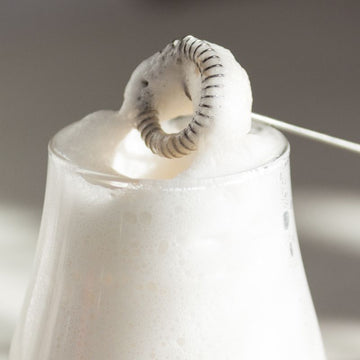


Yes. You can absolutely froth creamer. Whether it's liquid coffee creamer, flavored creamer, or even those little single-serve cups, most of them froth up just fine.
But there's a bit more to it than just going at it with a frother and hoping for the best. The type of creamer you use, the temperature, and the method all affect how thick and stable your froth turns out. Some creamers give you that café-quality foam effortlessly. Others fall flat in seconds.
If you've been wanting to level up your morning coffee without buying an espresso machine or spending money at a coffee shop every day, frothing your creamer at home is one of the easiest ways to do it. This article covers why creamer is actually a solid choice for frothing, how to do it step by step, and a few things to watch out for along
Why frothing creamer over milk
Milk is the traditional go-to for frothing, and it works great. So why bother with creamer at all?
For starters, flavor. Most creamers come pre-sweetened and flavored, which means you're adding vanilla, caramel, hazelnut, or whatever you like directly into the foam. With milk, you get plain froth and then have to add sweetener and flavor separately. Creamer cuts out that extra step and gives you a more consistent taste in every sip.
Then there's richness. Creamers, especially liquid ones, tend to have a higher fat content than regular milk. Fat is what gives froth that thick, velvety texture that feels luxurious on your tongue. Whole milk froths well, but creamer takes it a step further. The foam is denser, creamier, and holds its shape longer in your cup.
There's also the convenience factor. A lot of people already have creamer in their fridge because they use it daily in their coffee. If that's you, there's no need to buy a separate carton of milk just for frothing. Use what you've got.
One more thing worth mentioning is variety. The creamer aisle has gotten massive over the past few years. Oat milk creamers, almond milk creamers, seasonal flavors, sugar-free options. You can switch things up every week without much effort. Frothing milk is reliable but predictable. Frothing creamer lets you experiment without any real commitment.
That said, creamer isn't always better. If you prefer a lighter, more subtle foam, milk is still the way to go. Creamer froth can be heavy, and in some drinks that richness might overpower the coffee itself. It comes down to personal preference and what kind of cup you're going for.
How to froth creamer

Frothing creamer at home is simple and doesn't require any fancy equipment. There are a few different methods you can use depending on what you have in your kitchen. Here are the most common ones, broken down step by step.
Using a handheld milk frother
This is the easiest and most popular method. A handheld frother costs a few bucks and does the job in under a minute.
-
Pour your creamer into a tall, narrow cup or mug. Fill it no more than halfway since the creamer will expand as it froths.
-
If you want warm froth, heat the creamer first. Microwave it for about 20 to 30 seconds or warm it gently on the stove. You want it warm, not boiling. Overheating breaks down the proteins and fats that create stable foam.
-
Place the frother just below the surface of the creamer and turn it on.
-
Move it slowly up and down for about 15 to 30 seconds until the creamer doubles in volume and you see a thick layer of foam forming.
-
Spoon or pour the froth over your coffee and enjoy.
Using a French press
If you already have a French press sitting around, it doubles as a surprisingly effective frother.
-
Pour your creamer into the French press. Again, no more than halfway.
-
Warm the creamer beforehand if you want hot froth. Cold frothing works too, especially for iced drinks.
-
Insert the plunger and pump it up and down rapidly for about 20 to 30 seconds.
-
You'll see the creamer rise and thicken. Once it looks foamy and has roughly doubled in size, it's ready.
-
Pour it straight into your cup or hold back the liquid with the plunger and spoon out just the foam.
Using a mason jar
No frother, no French press, no problem. A jar with a lid works in a pinch.
-
Pour creamer into the jar, filling it about a third of the way.
-
Screw the lid on tightly.
-
Shake it vigorously for 30 to 45 seconds until the creamer gets foamy and roughly doubles in volume.
-
If you want warm froth, remove the lid and microwave the jar for about 15 to 20 seconds. The heat helps the foam set and hold its shape longer.
-
Pour or spoon the froth onto your coffee.
Regardless of which method you use, a couple of things make a real difference. Cold creamer froths up faster but warm creamer produces foam that lasts longer. And thicker creamers with higher fat content always froth better than thin, low-fat ones. If your froth keeps falling flat, the creamer itself might be too light. Try switching to a fuller-bodied option and see if that helps.
Frothing creamer is easier than you think

You don't need barista training or expensive gear to get great froth at home. A handheld frother, a French press, or even a jar with a lid is all it takes. Creamer froths well, tastes great, and gives you that coffee shop feel without leaving your kitchen.
The best part is how much room there is to play around. Different creamers, different temperatures, different methods. Once you get the basics down, you can tweak things until your morning cup is exactly the way you want it. Start simple, experiment a little, and you'll find your sweet spot fast.
FAQs
Does the type of creamer affect how well it froths?
It does. Creamers with higher fat content produce thicker, more stable foam. Dairy-based liquid creamers tend to froth the best. Plant-based options like oat milk creamer also work well because of their naturally creamy texture.
Thinner creamers and fat-free versions can still froth, but the foam won't hold up as long and may feel more airy than velvety. If you're not happy with the results, switching to a richer creamer usually fixes it.
Can you froth powdered creamer the same way?
Not directly. Powdered creamer needs to be dissolved in a small amount of hot water first before you can froth it. Mix it until it's smooth with no clumps, then use any of the frothing methods mentioned above.
The results won't be quite as rich as liquid creamer, but you can still get a decent layer of foam. Just make sure the powder is fully dissolved or you'll end up with a gritty texture on top of your coffee.
Does frothing creamer change its taste or sweetness?
The flavor stays the same, but the perception can shift slightly. Frothing adds air, which makes the texture lighter and can make the sweetness feel a little less concentrated compared to stirring the same amount of creamer directly into your coffee. If your drink tastes less sweet after frothing, try adding a touch more creamer than you normally would. That usually balances things out.


